
Staggered living concepts: shifted floor plates maximizing shared green terraces
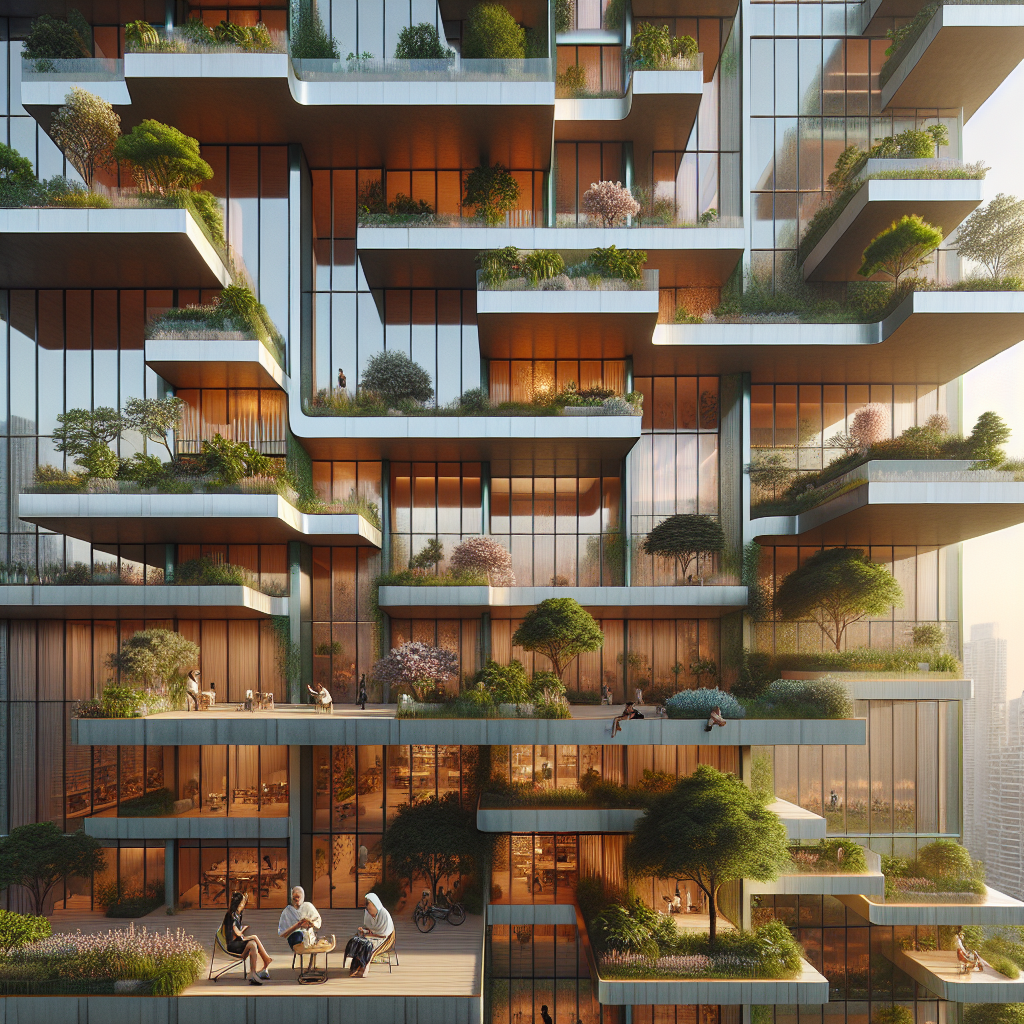
Staggered Living Concepts: Shifted Floor Plates Maximizing Shared Green Terraces
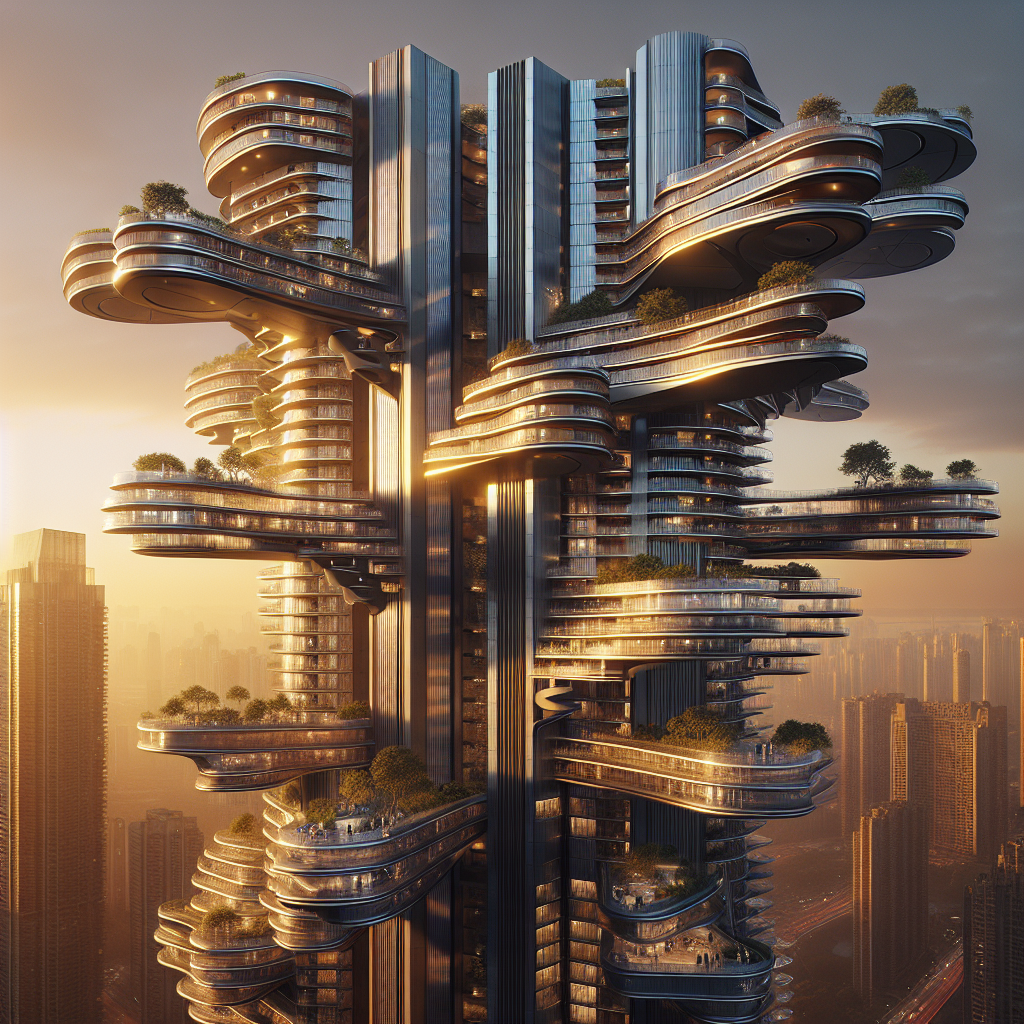
In the evolving lexicon of contemporary architecture, staggered living concepts have emerged as a defining response to the spatial, social, and environmental challenges of dense urban environments. Characterized by shifted floor plates that create cascading terraces and communal green spaces, these structures embody a new architectural language—one that blurs the boundary between private and public, built and natural, vertical and horizontal. More than a stylistic gesture, this approach signals a profound rethinking of how we inhabit cities, integrating ecological intelligence with human-centered design.
The Vertical Landscape Revolution
As cities continue to densify, the race for light, air, and greenery has intensified. Traditional high-rise typologies—rigid, repetitive, and vertically isolated—are being reimagined through staggered floor systems that carve out layered landscapes in the sky. These shifted floor plates not only generate visual dynamism but also unlock opportunities for shared green terraces that serve as social condensers and microclimatic regulators.
This architectural evolution aligns with the growing global emphasis on biophilic design, a philosophy that integrates natural systems into the built environment to enhance human well-being. By staggering levels, architects can introduce soil depth for vegetation, optimize solar exposure, and encourage cross-ventilation—transforming once-sterile façades into living ecosystems. These vertical gardens act as carbon sinks, mitigate heat island effects, and provide restorative environments for residents.
Architectural Morphology: From Monolith to Mosaic
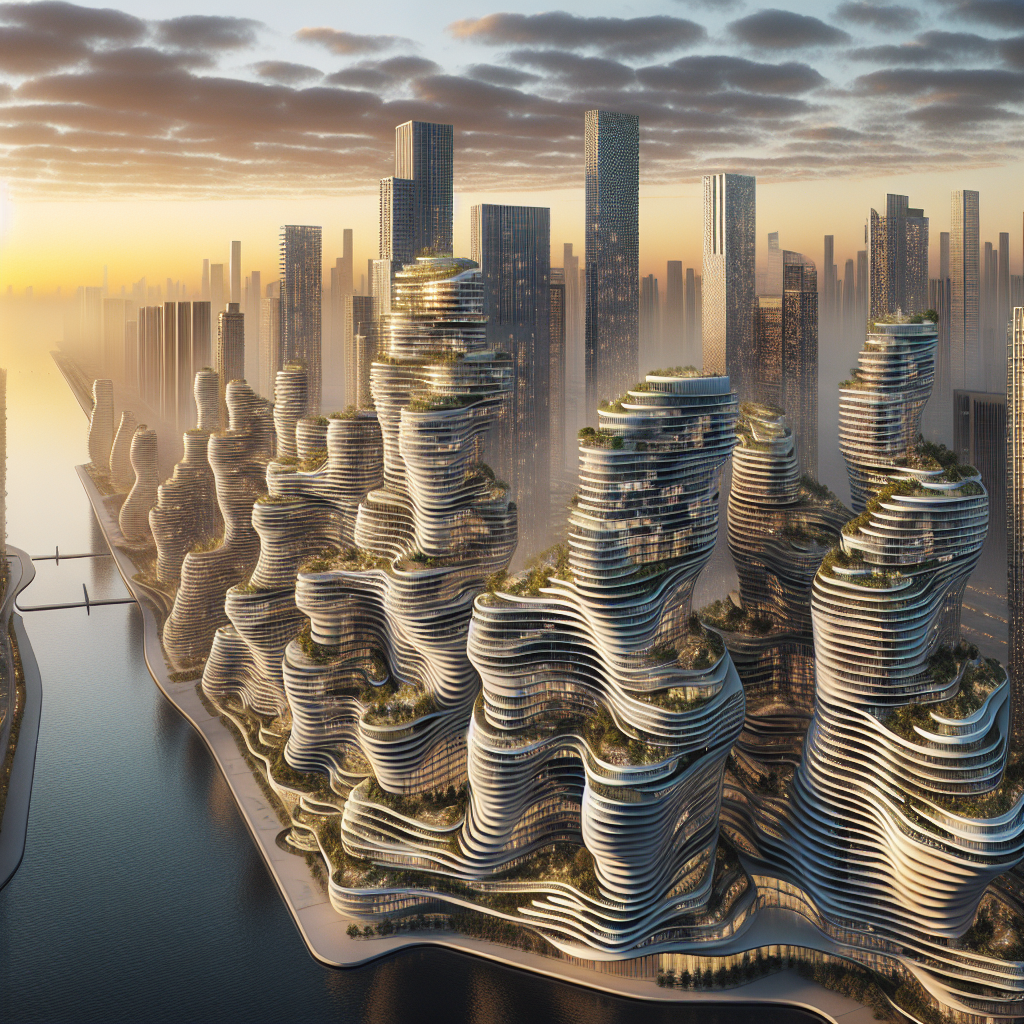
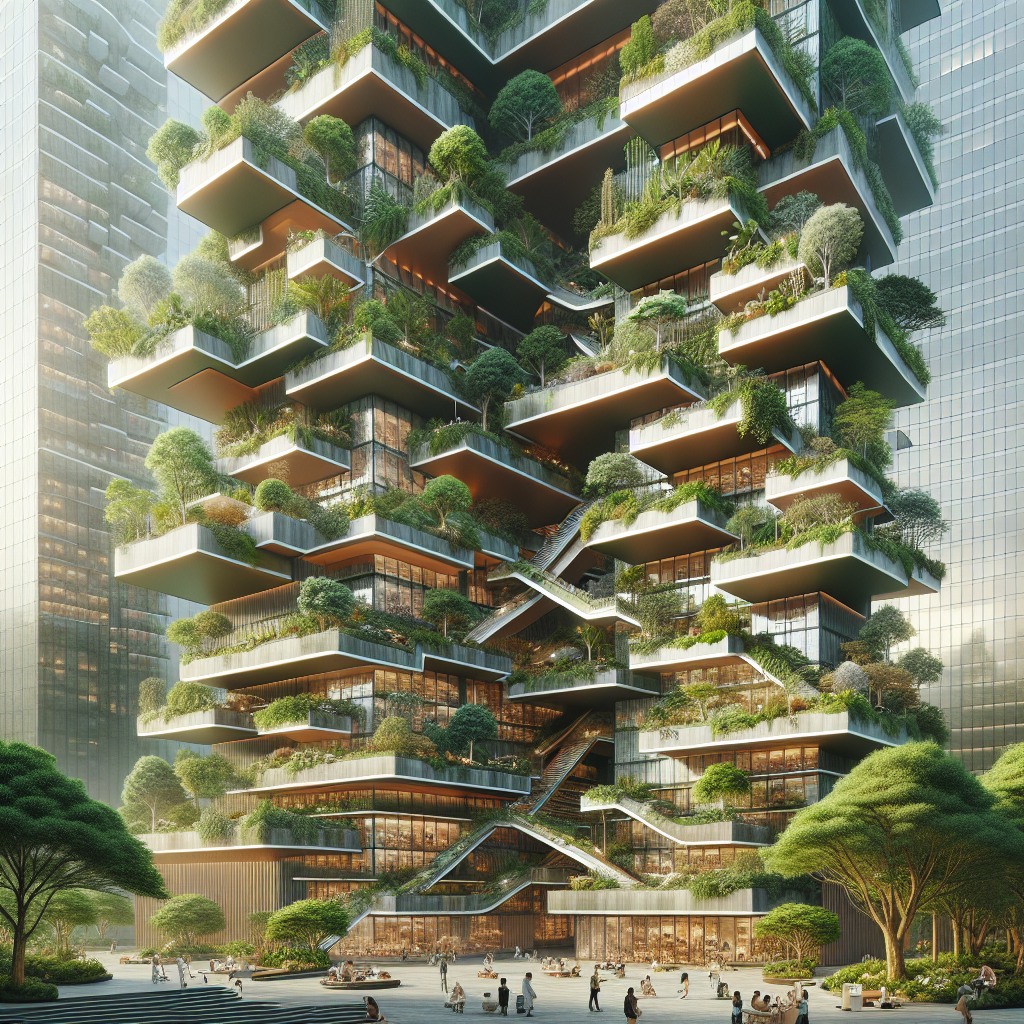
The formal language of staggered living departs from the monolithic tower. Instead, it embraces a mosaic of interlocking volumes—each offset to create outdoor extensions that read as suspended gardens. The result is a rhythmic, sculptural silhouette that animates the skyline while maintaining a human scale at the street level.
A prime example is the Valley in Amsterdam by MVRDV, where a stepped configuration transforms a commercial tower into a lush, inhabitable topography. Similarly, the EDEN Tower in Singapore by Heatherwick Studio uses offset balconies to weave vegetation through its vertical form, creating a porous façade that breathes. These projects illustrate how shifted floor plates can serve both aesthetic and environmental functions—offering a layered approach to urban living that is as performative as it is poetic.
This architectural shift echoes the ethos of green roof innovation, yet it extends the concept beyond the topmost layer, distributing greenery throughout the building’s height. The staggered typology effectively multiplies the surface area available for vegetation, creating a vertical parkland that redefines the relationship between architecture and landscape.
Human-Centric Urbanism: Social Connectivity in the Sky
Beyond environmental performance, staggered living reintroduces a vital social dimension into vertical architecture. The shared terraces created by offsetting floors act as communal nodes—spaces where residents can meet, garden, or simply pause. In a time when urban isolation is a growing concern, these terraces foster a sense of belonging and collective stewardship.
Architects are increasingly designing these elevated landscapes as multi-programmatic platforms: part garden, part playground, part co-working zone. The blurred boundaries between private balconies and communal decks encourage spontaneous interaction while maintaining gradations of privacy. This approach resonates with the principles of community-driven architecture, where spatial design becomes a catalyst for social cohesion.
From a psychological perspective, access to greenery and daylight has been linked to improved mental health and productivity. Studies by the World Health Organization highlight the importance of green access in urban well-being, reinforcing the relevance of staggered living as both an architectural and public health strategy.
Engineering the Offset: Structural and Environmental Intelligence
The success of staggered living concepts depends on sophisticated structural and environmental engineering. Each offset floor introduces lateral loads and complex cantilevering conditions that demand innovative solutions. High-strength concrete cores, post-tensioned slabs, and lightweight composite materials enable these dramatic overhangs without compromising stability.
Environmental modeling plays an equally critical role. Computational fluid dynamics (CFD) simulations help optimize wind patterns across terraces, ensuring comfort and safety. Integrated water management systems collect rainwater from upper levels to irrigate lower gardens, creating a closed-loop ecosystem. These strategies echo the sustainable ethos found in biodegradable architecture and other regenerative design practices that prioritize circular resource flows.
The layering of terraces also improves passive performance. By staggering floor plates, architects can shade lower levels naturally, reducing solar gain and energy consumption. The resulting microclimates—cooler, shaded, and oxygen-rich—turn vertical structures into breathable, self-regulating habitats.
Case Studies: Global Exemplars of Staggered Living
Across continents, architects are experimenting with staggered living typologies that reinterpret local contexts. In Milan, Stefano Boeri’s Bosco Verticale pioneered the integration of full-scale trees on residential balconies, setting a precedent for biophilic high-rises. In Tokyo, Sou Fujimoto’s Stacked House explores modular living through offset boxes that form intimate terraces within a compact footprint. Meanwhile, in Vancouver, the Terrace House by Shigeru Ban—constructed with timber and glass—demonstrates how wooden skyscrapers can embrace the staggered aesthetic while advancing low-carbon construction, a theme explored in depth in this article on timber high-rises.
Each of these projects reveals a different facet of the staggered paradigm: ecological integration, spatial flexibility, and cultural resonance. Collectively, they point toward a future where architecture acts less as an object and more as an evolving organism—responsive to climate, community, and context.
Urban Ecology and the Future of Vertical Neighborhoods
The rise of staggered living reflects a broader movement toward urban ecology—a recognition that cities must function as living systems. By distributing greenery vertically, architects can reconnect fragmented urban ecosystems, creating habitats for birds, pollinators, and small wildlife. According to the UN-Habitat, integrating biodiversity into high-density housing is a key strategy for sustainable urban development.
In this sense, staggered living is not merely an architectural style but an ecological framework. It redefines the high-rise as a vertical neighborhood—one that balances density with porosity, privacy with community, and technology with nature. The terraces become stages for everyday life: morning yoga under olive trees, evening gatherings under pergolas, or quiet reading corners surrounded by lavender and rosemary.
As cities worldwide pursue net-zero targets, the staggered typology aligns with the ambitions of net-zero energy buildings, offering both passive and active environmental benefits. Its potential lies not only in its form but in its capacity to reshape urban culture—inviting residents to live not above nature, but within it.
A New Urban Syntax
The architectural narrative of the 21st century is being rewritten through such hybrid typologies. The staggered living concept represents a synthesis of structural daring, ecological empathy, and social intelligence. It transforms the vertical city from a symbol of isolation into a tapestry of interconnected lives and landscapes.
In the shimmering terraces of these buildings, one glimpses the possibility of a new urban syntax—where architecture no longer competes with nature but choreographs it. The offset floors, cascading gardens, and communal decks form a living continuum that embodies the next frontier of sustainable urban design: a future where every elevation becomes a landscape, and every dwelling, a garden in the sky.
As architects, planners, and developers continue to experiment with these layered ecosystems, the promise of staggered living extends beyond aesthetics. It is a manifesto for coexistence—between people, plants, and the vertical city itself.
Keywords: staggered living, shifted floor plates, shared green terraces, vertical architecture, biophilic design, sustainable urbanism, vertical gardens, green architecture


Get the Mainifesto weekly — curated design debates, speculative ideas and the week's best articles every Saturday.