
Revival of crocheted: architecture fiber-based installations in large-scale pavilions
Revival of Crocheted: Architecture Fiber-Based Installations in Large-Scale Pavilions
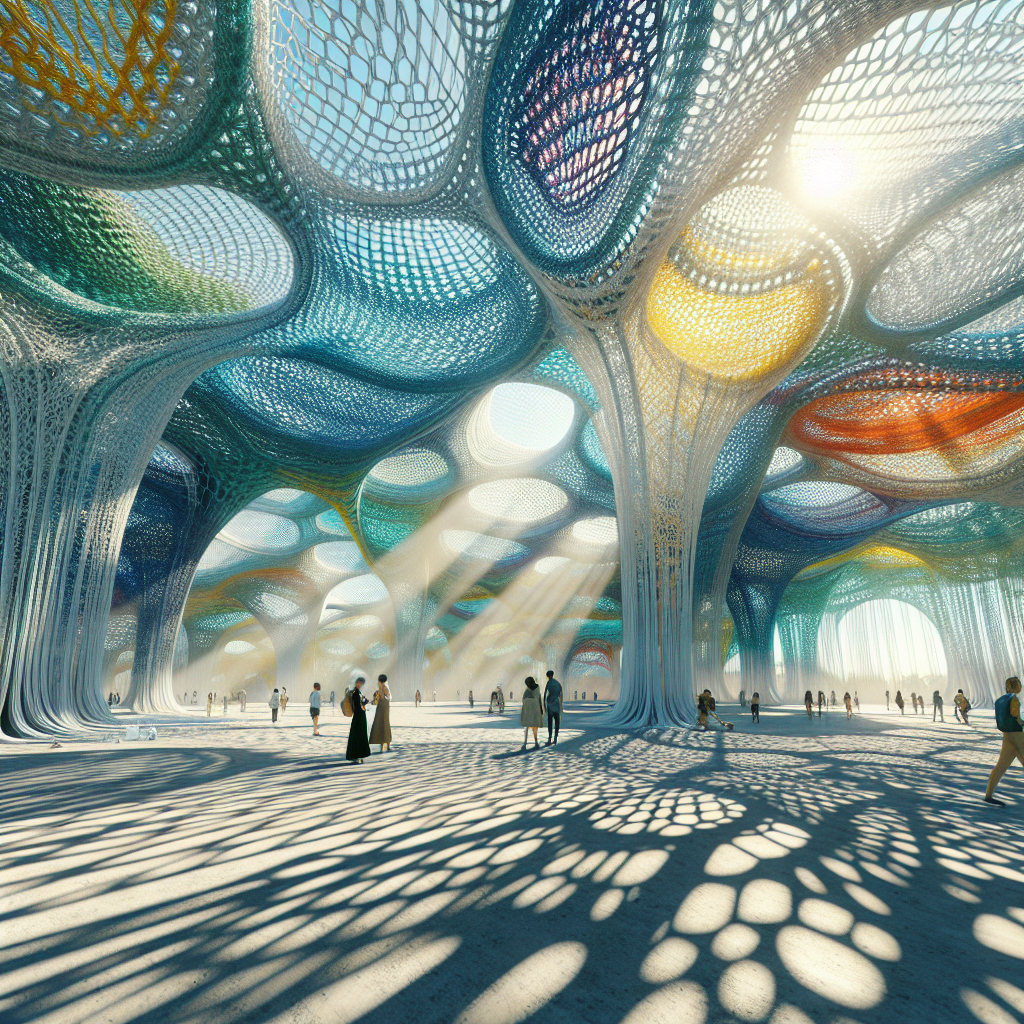
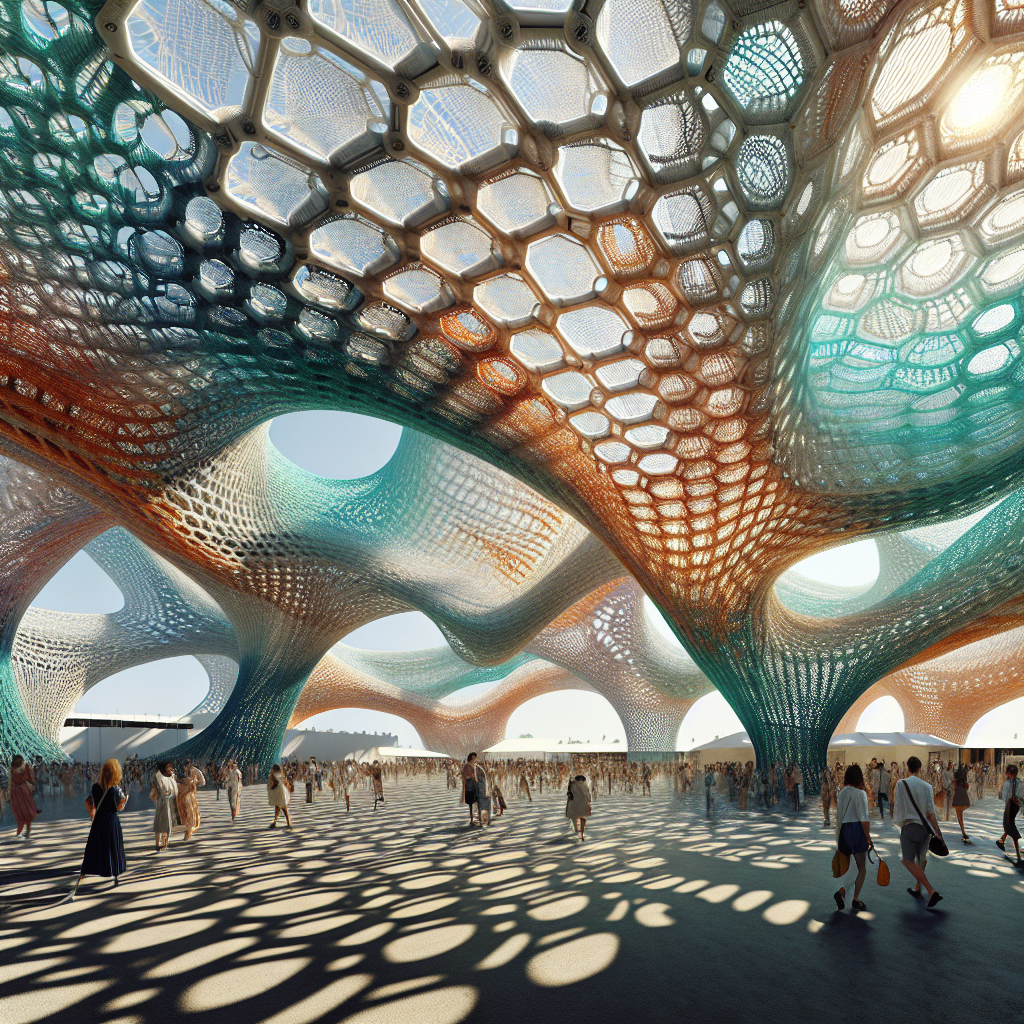
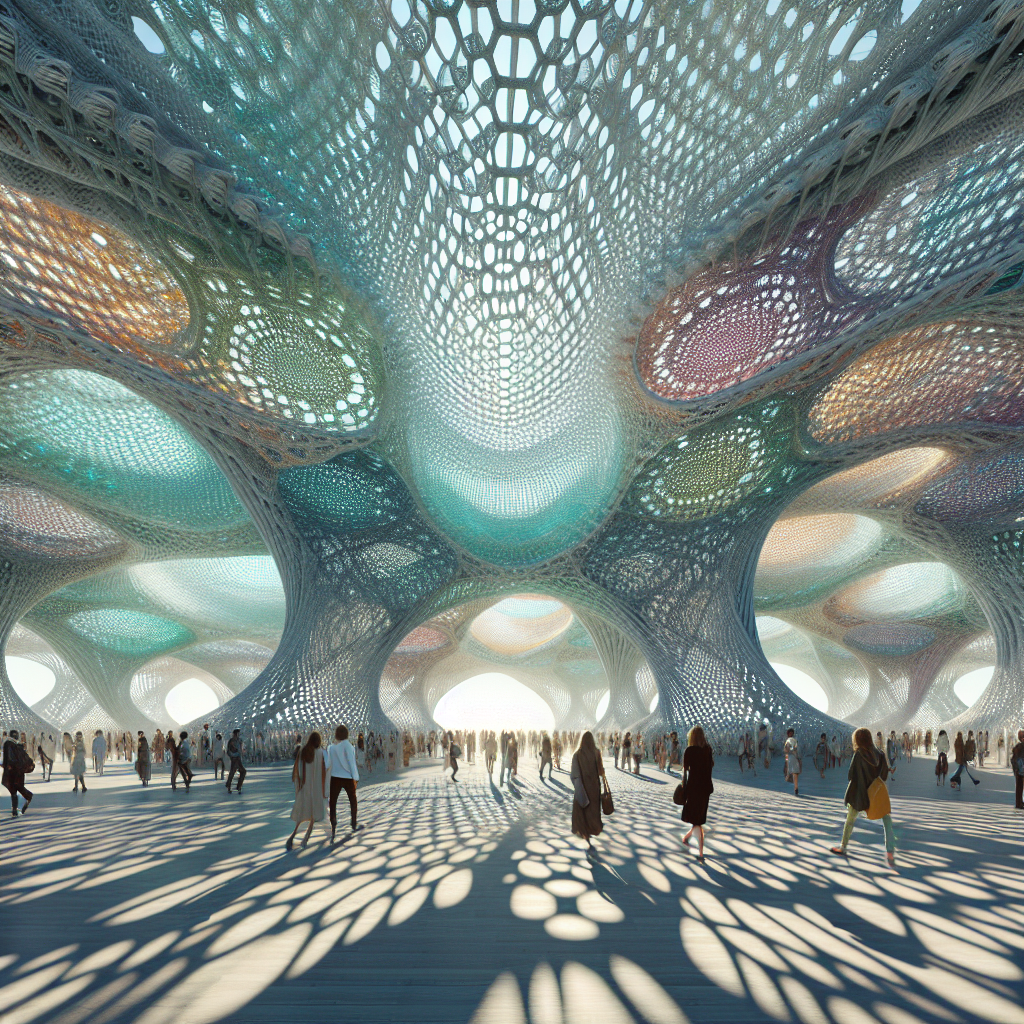
In the last decade, architecture has witnessed a quiet yet profound material revolution. Once relegated to the domestic sphere, crochet—the intricate looping of yarn through a single hook—has transcended its craft origins to become a medium of architectural expression. Across biennales, design weeks, and experimental pavilions, fiber-based installations are reimagining spatial boundaries, tactility, and sustainability. The revival of crocheted architecture signals not nostalgia, but a sophisticated synthesis of tradition, technology, and ecological consciousness.
The Tactile Turn: From Handcraft to Structural Art
The architectural world’s renewed fascination with textiles reflects a broader cultural shift toward the tactile and the human-made. As digital fabrication and parametric design dominate contemporary practice, designers are rediscovering the intimacy of handcraft. Crochet, with its inherent flexibility and capacity for complex geometries, offers a counterpoint to the rigidity of steel and concrete. It embodies what the philosopher Richard Sennett termed the “intelligence of the hand”—a knowledge embedded in making.
Architects and artists such as Ernesto Neto and Toshiko Horiuchi MacAdam have pioneered this intersection. Neto’s vast crocheted environments, often suspended in midair, envelop visitors in translucent membranes of organic color. MacAdam’s monumental playgrounds, woven from nylon fiber, transform tensile strength into joyful architecture. These works demonstrate how crochet’s cellular logic—loop by loop—can scale into architectural systems that are both structural and sensorial.
Fiber as Structure: Engineering the Soft Pavilion
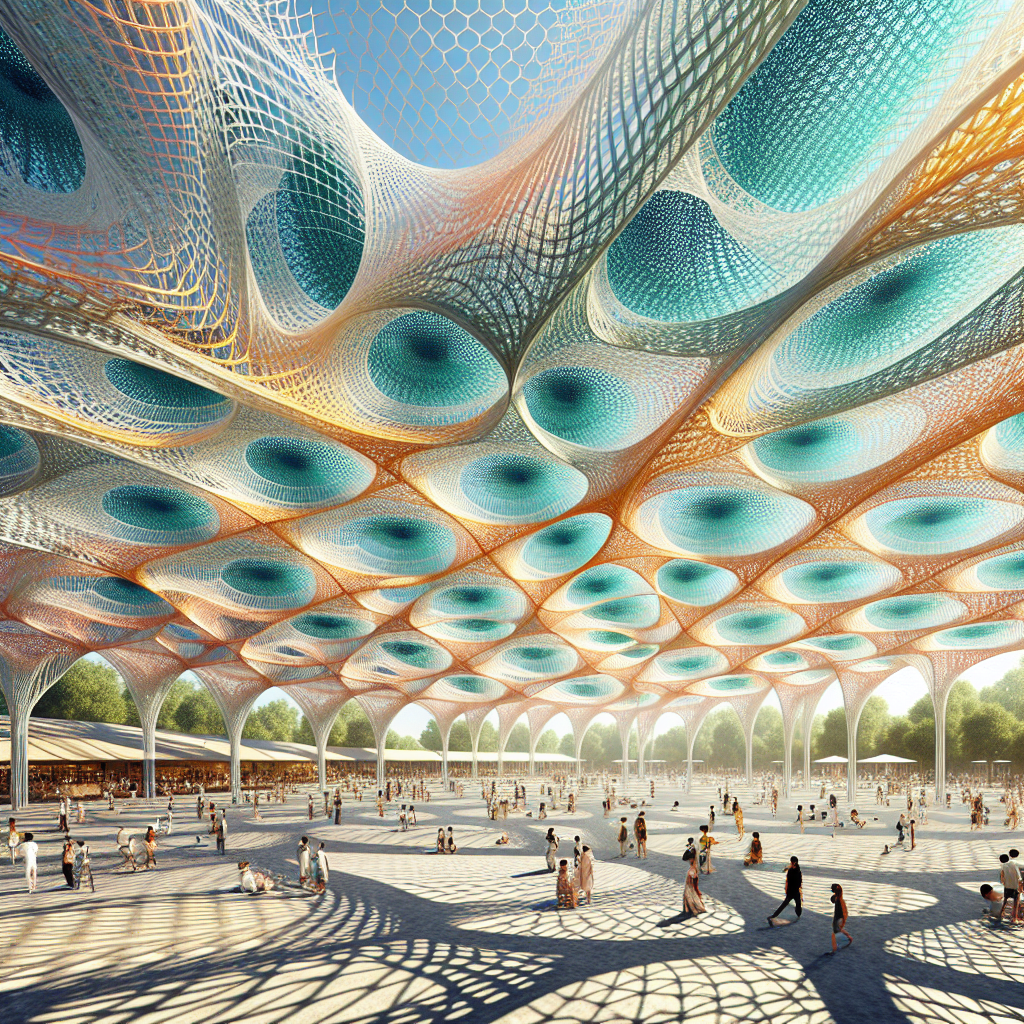
The large-scale crocheted pavilion challenges conventional notions of load-bearing and enclosure. Instead of resisting gravity, these structures negotiate with it. The tensile networks distribute stress through continuous loops, forming self-supporting canopies that breathe and move. Engineers collaborating with textile artists employ computational modeling to simulate fiber tension, ensuring that the softness of the material does not compromise stability.
At the 2023 Venice Architecture Biennale, the installation “Weaving the Anthropocene” by a collective of Chilean architects showcased a pavilion entirely crocheted from recycled fishing nets. The result was a shimmering, porous dome that filtered sunlight into a mosaic of aquamarine hues. The project exemplified how fiber-based architecture can embody circular design principles—transforming waste into spatial poetry.
This approach resonates with the principles explored in zero-waste architecture, where material cycles are closed, and every thread counts. Crochet’s modularity allows for easy disassembly and reuse, aligning perfectly with the growing emphasis on biodegradable and adaptive structures.
Digital Craftsmanship: The Algorithmic Crochet
While crochet’s roots are ancient, its future is decidedly digital. Designers are merging algorithmic design tools with traditional fiber techniques to create what some call “parametric crochet.” Using software such as Rhino and Grasshopper, architects can simulate the looping logic of crochet to generate complex, non-repetitive patterns that respond to environmental data—light, airflow, or acoustic resonance.
In a recent project by the Berlin-based studio LoopLab, a 20-meter crocheted canopy was fabricated using robotic arms that mimicked human hand movements. The pattern density varied according to solar exposure, creating a responsive shading system. This fusion of craft and computation echoes the broader exploration of parametric design in contemporary architecture, where code becomes a form of creative embroidery.
Such hybrid practices challenge the binary between the handmade and the machine-made. They also align with the ongoing discourse around AI in architecture, where algorithms are not replacing artisans but amplifying their intuition.
Material Ecology: Sustainability Through Softness
Crocheted installations are not merely aesthetic gestures—they are part of a larger ecological narrative. The use of natural fibers such as hemp, jute, or bamboo aligns with the ethos of biophilic design, which seeks to reconnect built environments with nature. As explored in biophilic design research, tactile and organic materials have measurable effects on human well-being, reducing stress and enhancing cognitive function.
Moreover, the low-energy production process of crochet—requiring no heavy machinery or heat treatment—makes it an inherently sustainable technique. When combined with biodegradable fibers or recycled polymers, crocheted architecture becomes a model for low-carbon construction. It exemplifies what the MIT researcher Neri Oxman describes as “material ecology”—a design philosophy where materials are not inert but living participants in the architectural ecosystem.
The environmental implications are profound. In contrast to traditional pavilions that often end up as waste after exhibitions, crocheted structures can be composted, repurposed, or reconfigured. Their temporality becomes a virtue, not a flaw.
Social Fabric: Weaving Communities Through Architecture
Beyond material innovation, crocheted architecture carries a powerful social dimension. The act of crocheting—repetitive, meditative, and communal—translates into participatory design processes. Many fiber-based pavilions are built collaboratively, inviting local communities to contribute stitches, stories, and labor. This democratization of making recalls the ethos of the Arts and Crafts movement, which championed the dignity of manual work against industrial alienation.
In Mexico City, the “Tejido Urbano” pavilion involved over 200 volunteers crocheting modules from discarded textiles. The resulting canopy, suspended over a public plaza, became both shelter and symbol—a literal weaving of social bonds. Such projects underscore how architecture can operate as a social fabric in both metaphorical and material terms.
This participatory approach resonates with the ideas of community-driven architecture, where the process of building is as significant as the final form. Crochet, in this sense, becomes a language of inclusion—one loop connecting another, one person connecting to the next.
Fiber Futures: The New Frontier of Architectural Experimentation
The resurgence of crocheted architecture is part of a broader movement toward soft structures and ephemeral installations. These projects challenge the dominance of permanence in architectural thinking. They invite us to imagine buildings that breathe, sway, and eventually dissolve—structures that are alive in their temporality.
As cities grapple with climate adaptation and resource scarcity, fiber-based pavilions offer a model for lightweight, low-impact construction. They can be deployed rapidly for festivals, disaster relief, or urban regeneration projects. Their flexibility and portability recall the nomadic architectures of the past, yet their design intelligence is unmistakably contemporary.
Recent research in tensile structures and smart textiles suggests that future crocheted pavilions may integrate sensors, photovoltaic threads, or responsive fibers that adjust to environmental stimuli. Imagine a crocheted canopy that glows softly at night, powered by woven solar filaments, or one that tightens its weave in response to wind pressure. The boundary between architecture and organism begins to blur.
Conclusion: The Thread That Connects
The revival of crocheted architecture is not a passing trend but a profound rethinking of what it means to build. It merges the intimacy of craft with the ambition of engineering, the softness of fiber with the rigor of structure. In an era dominated by digital precision, crochet reintroduces imperfection, rhythm, and touch—qualities that remind us of our humanity.
These fiber-based installations, whether ephemeral pavilions or permanent interventions, weave together the technological, the ecological, and the emotional. They are architecture at its most elemental: a shelter made of loops, a space defined by connection. As the discipline continues to evolve, the crochet hook—humble yet transformative—may well become one of its most radical tools.
In the looping of yarn, architects are rediscovering the looping of meaning: that to build is to bind, to connect, and to care.
Published on 12/04/2025
Get the Mainifesto weekly — curated design debates, speculative ideas and the week's best articles every Saturday.