
Wabi-sabi city nooks: celebrating imperfection and natural wear
Wabi-Sabi City Nooks: Celebrating Imperfection and Natural Wear
In an era defined by digital precision and algorithmic perfection, the quiet philosophy of wabi-sabi—the Japanese art of embracing imperfection, impermanence, and incompleteness—has found a renewed resonance in urban design. Across the world’s densest metropolises, architects and designers are reinterpreting this centuries-old aesthetic to create wabi-sabi city nooks: intimate, contemplative spaces that celebrate the poetry of wear, the beauty of patina, and the quiet dignity of materials shaped by time.
The Essence of Wabi-Sabi in Urban Contexts
Rooted in Zen Buddhism, wabi-sabi is less a style than a worldview. It values the transient and the imperfect, the modest and the weathered. In cities increasingly dominated by glass towers and LED façades, this philosophy offers a counterpoint—a reminder that beauty often lies in what is irregular, unpolished, and fleeting. The wabi-sabi aesthetic encourages designers to see decay not as decline but as transformation, to view cracks, stains, and shadows as evidence of life rather than flaws to be erased.
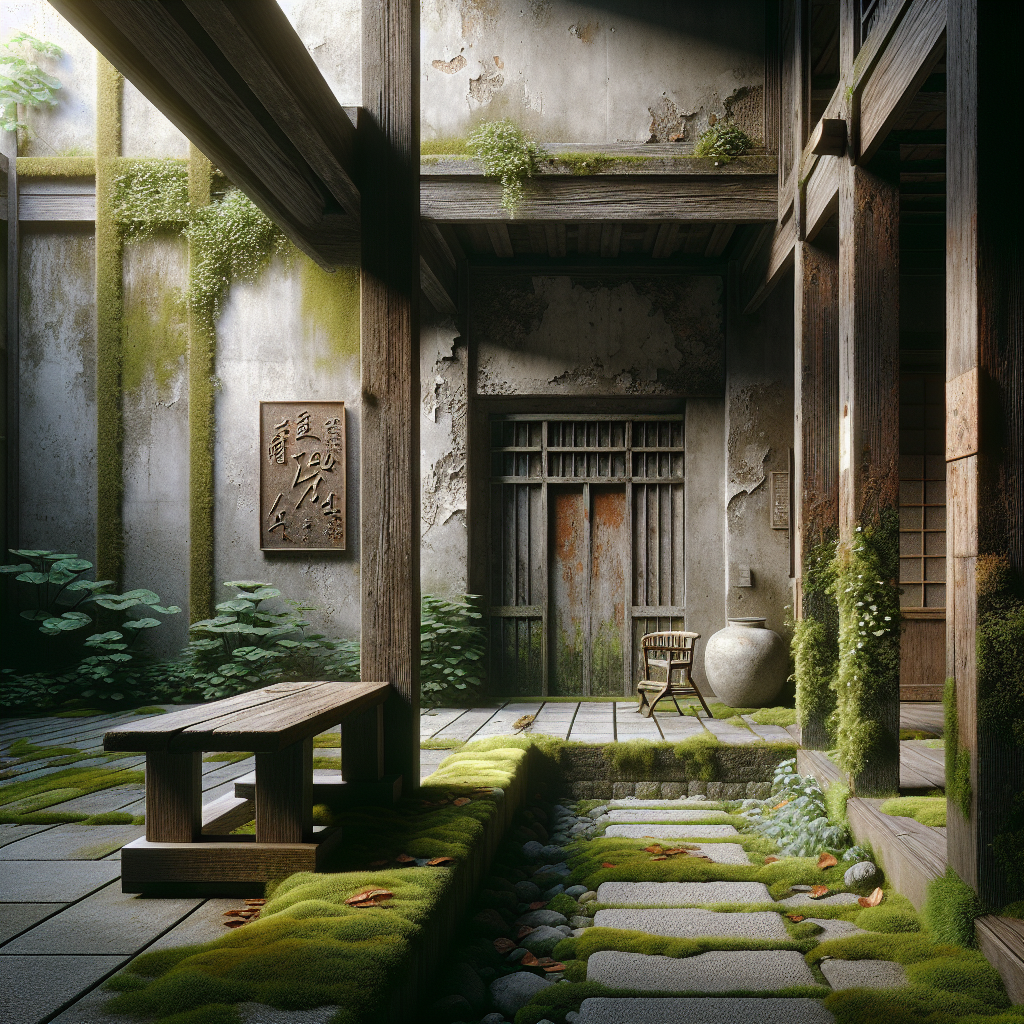
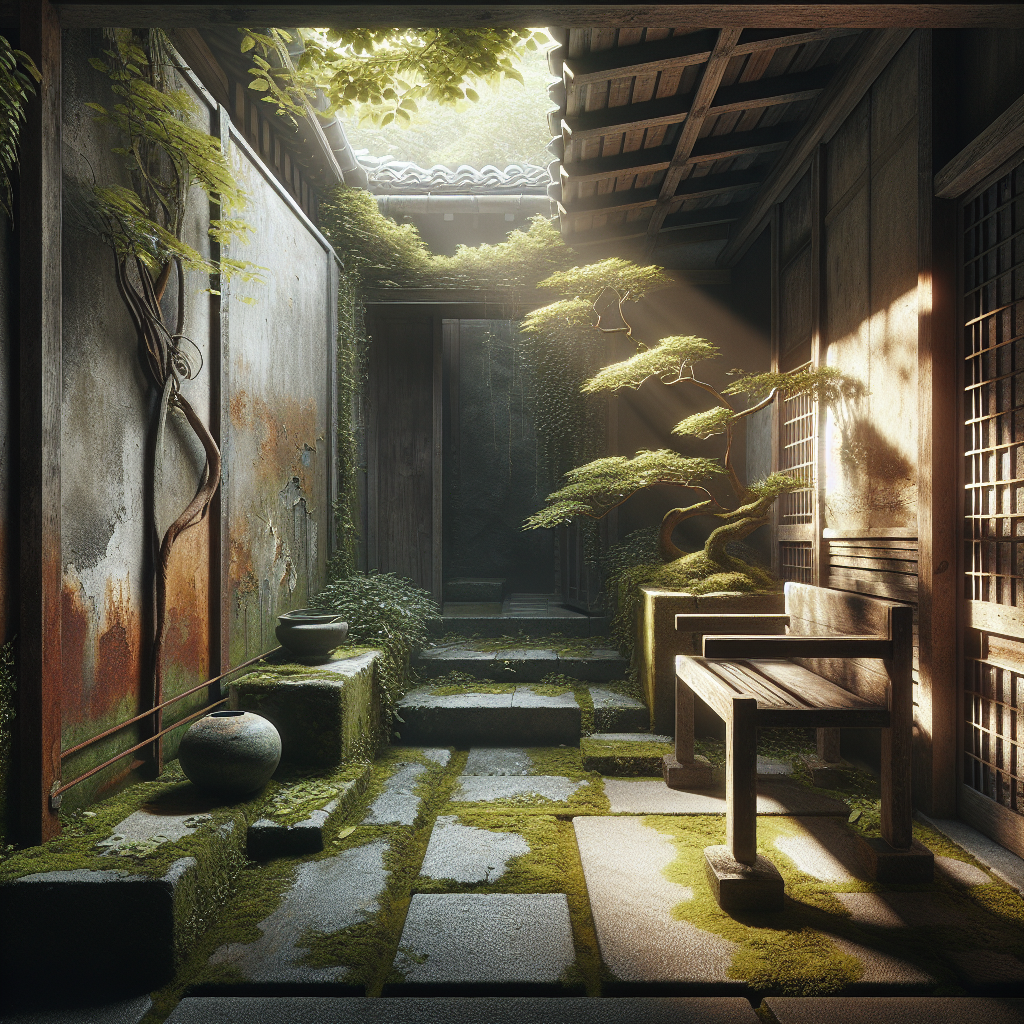
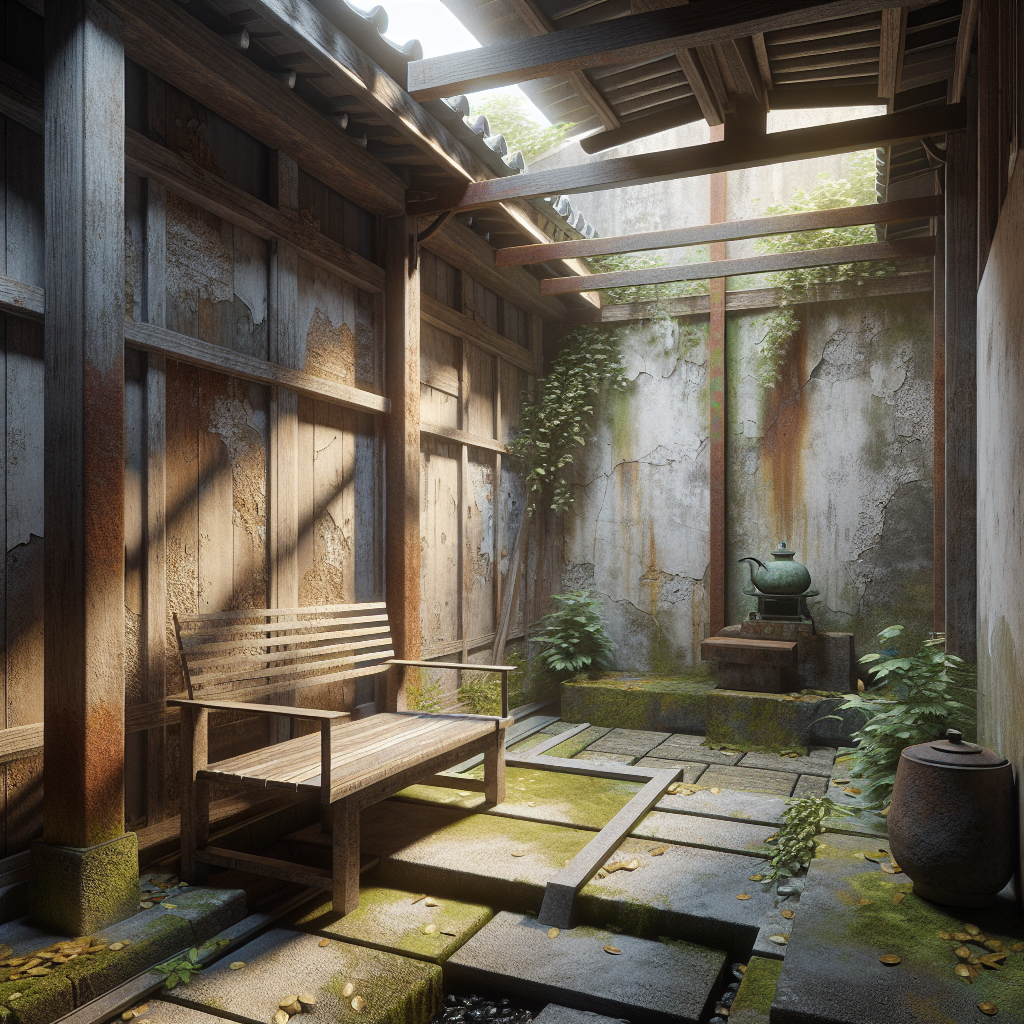
In contemporary architecture, this manifests through the use of natural materials—aged timber, oxidized metal, hand-formed clay, and raw concrete—that evolve with time. These materials record their histories in subtle ways: a rusting balustrade that deepens in hue with each season, a plaster wall that absorbs the city’s humidity, a wooden bench polished by countless hands. The city nook becomes a microcosm of this philosophy—a pause within the urban rush, where imperfection feels intentional and time feels tangible.
Urban Nooks as Modern Sanctuaries
Designers are increasingly crafting wabi-sabi-inspired retreats within the urban fabric—hidden courtyards, narrow alleys, and reclaimed rooftops that serve as antidotes to the overstimulation of modern life. These spaces are not designed to impress but to soothe. They rely on asymmetry, texture, and natural light to evoke calm. In Tokyo, for instance, small tea houses tucked between office buildings reinterpret traditional chashitsu principles with concrete and cedar, creating meditative voids amid neon chaos. In Copenhagen, adaptive reuse projects transform disused warehouses into contemplative lounges, their peeling paint and exposed brickwork left deliberately untouched.
These interventions echo the ethos of adaptive reuse—the practice of giving old structures new life without erasing their past. The visible traces of age become part of the design narrative, reminding visitors that the built environment, like nature, is in constant flux.
Material Honesty and the Beauty of Decay
At the heart of wabi-sabi design lies material honesty. The trend toward polished minimalism is giving way to a more tactile sensibility—one that favors raw finishes and celebrates entropy. Architects are experimenting with surfaces that evolve organically: limewashed walls that fade unevenly, untreated brass fixtures that tarnish gracefully, and stone floors that bear the soft erosion of footsteps. This aesthetic of impermanence aligns with sustainable design values, encouraging longevity through acceptance rather than resistance to change.
In the same spirit, the rise of reclaimed materials has redefined luxury. Designers now seek out weathered timber beams, salvaged terracotta tiles, and recycled stone not for nostalgia, but for their embodied history. The imperfections of these materials—nicks, stains, irregular grains—imbue spaces with authenticity. They remind us that true sustainability is not about constant renewal, but about continuity.
Designing for the Senses: Texture, Light, and Silence
Wabi-sabi city nooks are not merely visual experiences; they are sensory compositions. Texture plays a pivotal role—rough plaster walls contrast with smooth river stones, while linen drapes filter daylight into soft gradients. Light, in particular, is treated as a living material. Instead of uniform illumination, designers favor chiaroscuro effects—shadows that shift throughout the day, revealing the passage of time. The result is a spatial rhythm that encourages stillness and reflection.
Sound, too, is integral. The muffled hum of the city becomes part of the ambiance, softened by natural materials that absorb rather than amplify noise. This sensory restraint aligns with the growing movement toward mindful design, which prioritizes emotional well-being and sensory balance in built environments.
Case Studies: Global Interpretations of Wabi-Sabi Urbanism
In London’s Shoreditch district, Studio McLeod’s “Quiet Courtyard” project transforms a forgotten service alley into a moss-lined retreat. The designers intentionally preserved the cracked concrete and rusted pipes, integrating them into a minimalist composition of reclaimed oak benches and climbing ivy. The space feels both ancient and contemporary—a living palimpsest of the city’s industrial past.
Meanwhile, in Mexico City, architect Fernanda Canales’ residential projects reinterpret wabi-sabi through local materials. Her use of volcanic stone, raw stucco, and unsealed wood creates homes that breathe with their environment. The architecture accepts the tropical climate’s effects—stains, moss, and fading pigments—as part of its evolving identity.
In Kyoto, the source of the philosophy itself, architects like Kengo Kuma continue to explore the dialogue between tradition and modernity. His urban tea pavilions, constructed from bamboo lattices and translucent paper, embody the ma—the Japanese concept of negative space—inviting visitors to appreciate emptiness as much as form.
Wabi-Sabi and the Future of Sustainable Urban Design
As cities grapple with the environmental consequences of overproduction and rapid urbanization, wabi-sabi offers a profound ecological lesson: to design with time, not against it. The philosophy encourages the use of materials that age gracefully, reducing the need for constant maintenance or replacement. It aligns with the principles of circular design, where longevity and adaptability replace disposability.
Recent studies from the World Green Building Council highlight that adaptive, low-intervention design strategies can reduce embodied carbon by up to 40%. By embracing imperfection, architects not only craft emotionally resonant spaces but also contribute to environmental resilience. The weathered wall becomes a manifesto for sustainability—proof that endurance can be beautiful.
The Emotional Resonance of Imperfection
Beyond its material and ecological dimensions, wabi-sabi carries an emotional depth that modern urban life often lacks. In cities obsessed with speed and novelty, these imperfect nooks remind us of slowness, humility, and acceptance. They invite us to pause, to notice the uneven grain of a wooden handrail or the way rainwater darkens a stone path. This attentiveness transforms the act of inhabiting space into a form of meditation.
Designers and architects are increasingly aware that emotional well-being is inseparable from spatial experience. The biophilic design movement shares this sensibility, emphasizing the restorative power of natural materials and organic forms. Wabi-sabi extends this by acknowledging the passage of time as a vital part of that connection—by allowing materials to live, breathe, and age alongside us.
Reframing Urban Luxury
In the high-end design world, where luxury has long been equated with perfection, wabi-sabi is quietly redefining the term. True sophistication now lies in restraint, authenticity, and tactility. A weathered bronze handle, a linen curtain frayed at the edge, or a hand-thrown ceramic basin speaks of craftsmanship and patience—qualities increasingly rare in mass-produced environments. The wabi-sabi city nook, in this sense, becomes a new form of urban luxury: understated, soulful, and profoundly human.
Embracing the Patina of Time
As cities evolve, so too must our understanding of beauty. The wabi-sabi approach teaches that design need not resist entropy but can instead collaborate with it. The rust, the crack, the fading pigment—these are not signs of neglect but of life unfolding. They remind us that architecture, like humanity, is a living process, shaped by time, weather, and memory.
In celebrating imperfection, we rediscover the

Get the Mainifesto weekly — curated design debates, speculative ideas and the week's best articles every Saturday.