
Timeless adobe revival: updated earthen architecture with advanced materials

Timeless Adobe Revival: Updated Earthen Architecture with Advanced Materials
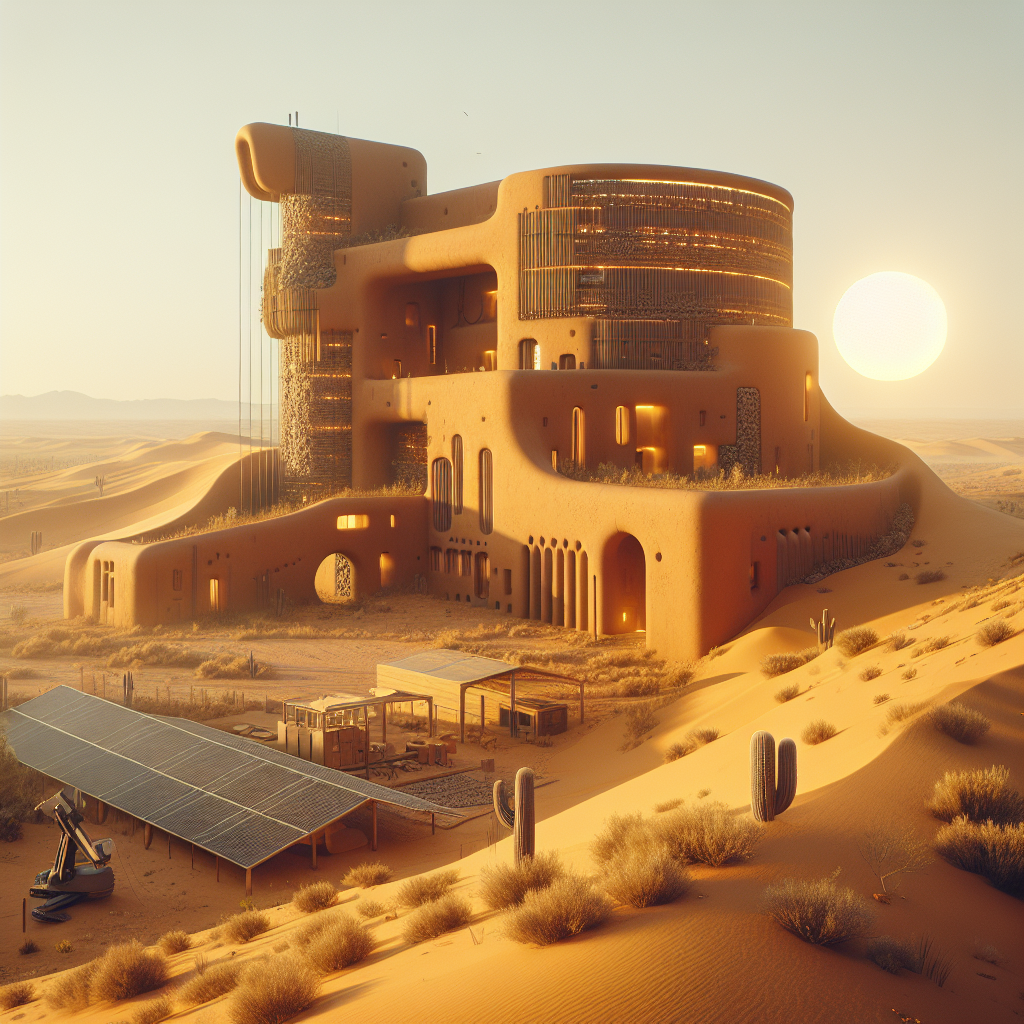
Across the deserts of New Mexico, the valleys of Andalusia, and the plateaus of Morocco, adobe architecture—once dismissed as a relic of pre-industrial craftsmanship—is experiencing a profound revival. Yet this is not a nostalgic return to mud and straw. It is a technologically sophisticated reimagining of earthen architecture that merges ancient wisdom with cutting-edge materials science, sustainability principles, and digital fabrication. The result is a new architectural language: one that is tactile, thermally intelligent, and deeply attuned to both ecology and culture.
The Return of Earth: Why Adobe Matters Again
Adobe, derived from the Arabic al-tob meaning “the brick,” has been used for millennia across arid and semi-arid regions. Its appeal lies in its thermal mass—the ability to absorb heat during the day and release it at night—creating naturally regulated interiors without mechanical systems. In an era defined by climate anxiety and energy crises, this passive performance is more relevant than ever. According to the United Nations Environment Programme, the building sector accounts for nearly 37% of global carbon emissions. Adobe’s low embodied energy and recyclability make it a compelling alternative to carbon-intensive materials like concrete and steel.
Yet the new adobe revival is not about romanticizing the past. It is about redefining vernacular intelligence through the lens of innovation. Architects and material scientists are now blending traditional clay, sand, and straw with biopolymers, nanofibers, and phase-change materials to enhance durability, moisture resistance, and structural performance. These advancements allow adobe to meet modern building codes while retaining its sensory and environmental richness.
Material Alchemy: From Mud to High-Performance Composite
In the laboratories of ETH Zurich and the Massachusetts Institute of Technology, researchers are experimenting with stabilized earthen composites that integrate microscopic cellulose fibers and mineral binders. These additives improve tensile strength and prevent cracking, addressing one of adobe’s historical weaknesses. Meanwhile, digital tools such as 3D printing with clay-based materials are transforming how adobe structures are conceived and built. Robotic extrusion systems can now layer earthen mixtures with millimetric precision, enabling fluid geometries and complex vaults that were once impossible to achieve by hand.
In Morocco’s Draa Valley, the Atelier des Arcs project by Paris-based architect Lina Ghotmeh exemplifies this fusion. The building’s thick, ochre-toned walls are made from a hybrid adobe reinforced with basalt fibers and sealed with a breathable silicate coating. The result is a monolithic form that feels both ancient and futuristic—its surface shimmering subtly under the desert sun, its interiors cool and hushed like a sanctuary.
Digital Vernacular: Parametric Design Meets Earth
The intersection of parametric design and earthen construction has opened a new frontier for sustainable architecture. Using algorithmic modeling, architects can simulate airflow, solar exposure, and humidity absorption to optimize wall thickness and window placement. This computational approach echoes the natural logic of traditional adobe villages, where generations of builders intuitively refined their designs to respond to microclimates.
Projects such as the Casa Tierra in Oaxaca, Mexico, by Estudio A0, employ digital mapping to reinterpret the spatial rhythm of indigenous Zapotec dwellings. The home’s undulating adobe walls are 3D-printed using local soil mixed with rice husk ash, reducing cement use by 90%. The structure demonstrates how data-driven design can amplify the intelligence of vernacular methods rather than replace them.
This convergence of technology and tradition parallels broader shifts in sustainable architecture, akin to the rise of timber skyscrapers and biodegradable architecture. In each case, designers are rediscovering the potential of natural materials when enhanced by modern science.
Thermal Poetry: Comfort Beyond Mechanization
Walking into a contemporary adobe home is a sensory experience unlike any other. The air feels denser, cooler, and imbued with a faint mineral scent. Light filters through deep-set apertures, casting soft gradients across textured walls. The acoustics are muted, absorbing sound rather than reflecting it. These qualities—so difficult to replicate with synthetic materials—create what many architects describe as “thermal poetry”: a living dialogue between material, climate, and inhabitant.
Recent studies from the Building Research Establishment in the UK show that earthen walls can reduce indoor temperature fluctuations by up to 60%, significantly lowering the need for air conditioning. In hot climates, this translates into both energy savings and improved well-being. It aligns closely with the ethos of biophilic design, which emphasizes harmony between built environments and natural systems.
Global Case Studies: Adobe in the 21st Century
In the American Southwest, the Taos Earthworks Residence by Studio Rick Joy reinterprets Pueblo traditions through a minimalist lens. The home’s rammed-earth and adobe hybrid walls are paired with steel lintels and photovoltaic roofing, merging tactile authenticity with technological efficiency. The interiors, finished in hand-polished clay plaster, glow with a soft, matte luminosity that evokes the desert at dusk.
Across the Atlantic, Spain’s Centro de Interpretación del Barro in Badajoz celebrates the region’s ceramic heritage. Designed by architect José María Sánchez García, the building employs prefabricated adobe panels stabilized with lime and hemp fibers. The panels are modular, recyclable, and thermally efficient—proof that earthen construction can align with contemporary demands for scalability and precision.
In Africa, the Makoko Floating School in Lagos, Nigeria, though primarily timber-based, inspired a wave of experiments in buoyant earthen structures. Local innovators are now exploring lightweight adobe composites for amphibious housing, addressing both climate adaptation and affordability. This direction resonates with global explorations in floating architecture, where material resilience meets environmental urgency.
Challenges and the Path Forward
Despite its promise, the adobe revival faces practical and regulatory challenges. Building codes in many countries still favor industrial materials, and misconceptions about adobe’s fragility persist. Moreover, scaling production of stabilized earthen materials requires new supply chains and specialized labor training. Yet these obstacles are being addressed through academic partnerships and pilot projects worldwide.
Architectural schools are reintroducing earthen construction workshops into their curricula, emphasizing hands-on experimentation. Startups are developing prefabricated adobe modules compatible with robotic assembly, bridging the gap between artisanal craft and industrial efficiency. As the World Green Building Council reports, the demand for low-carbon materials is expected to triple by 2030—an opportunity for adobe to reclaim its rightful place in the architectural lexicon.
Adobe as Philosophy: Building with Time, Not Against It
What distinguishes adobe from other sustainable materials is its temporal quality. It ages gracefully, recording the passage of time through subtle patinas and surface irregularities. This aligns with the aesthetic of wabi-sabi—the celebration of impermanence and authenticity. In a world obsessed with smoothness and speed, adobe offers slowness, tactility, and connection.
As architects continue to seek a balance between innovation and identity, adobe stands as a reminder that progress need not erase tradition. The future of architecture may well be written in earth—digitally modeled, scientifically enhanced, and yet profoundly human.
Conclusion: The Earth Reimagined
The timeless adobe revival is not a fleeting trend but a philosophical shift toward regenerative architecture. It challenges the dichotomy between primitive and advanced, showing that the most forward-thinking designs often emerge from the oldest materials. In this synthesis of soil and science, we glimpse a new architectural paradigm—one that builds not only for efficiency or aesthetics but for continuity with the planet itself.
In the words of a Moroccan craftsman interviewed


Get the Mainifesto weekly — curated design debates, speculative ideas and the week's best articles every Saturday.