3D Printed Clay: How Mud is Becoming the New Concrete
3D Printed Clay: How Mud is Becoming the New Concrete
In the shifting landscape of sustainable architecture, a quiet revolution is taking shape—layer by layer, extrusion by extrusion. Clay, one of humanity’s oldest building materials, is being reimagined through the lens of digital fabrication. What was once molded by hand is now printed by robotic arms with algorithmic precision. The result? A new architectural language that merges ancient wisdom with cutting-edge technology, redefining what we mean by “building from the earth.”
The Return of Earth as a Modern Material
For millennia, clay has sheltered civilizations—from the adobe dwellings of North Africa to the rammed-earth temples of Asia. Yet, in the 20th century, it was overshadowed by concrete’s industrial might. Today, as the environmental toll of cement production becomes impossible to ignore, designers and engineers are revisiting clay’s humble virtues. According to the ArchDaily sustainability index, cement manufacturing accounts for nearly 8% of global CO₂ emissions. Clay, by contrast, is abundant, recyclable, and requires minimal energy to process.
What makes this resurgence different is the role of technology. With 3D printing, clay’s plasticity becomes a programmable parameter. The material can be extruded into intricate geometries that were once impossible to achieve by hand, offering both structural integrity and aesthetic nuance. This technological reinterpretation positions clay not as a nostalgic throwback, but as a viable alternative to concrete in the era of climate-conscious design.
From Handcraft to Algorithm
3D printing has transformed the way architects think about form and fabrication. By controlling the deposition of clay through robotic systems, designers can achieve complex curvatures, porous walls, and self-shading facades—all without molds or waste. The process aligns with the ethos of circular economy design, where efficiency and adaptability replace excess and rigidity.
Studios like WASP in Italy and Emerging Objects in California are leading this movement. Their projects, from small pavilions to full-scale homes, demonstrate how parametric modeling can translate into sustainable construction. The clay printer becomes a sculptor of microclimates—its layered textures naturally regulating temperature and humidity. The resulting structures breathe, age, and adapt, much like living organisms.
Material Intelligence Meets Environmental Sensitivity
Clay’s natural porosity offers thermal mass and moisture control, reducing the need for mechanical cooling systems. When combined with digital precision, these properties create buildings that are both energy-efficient and sensorially rich. The Materials Today Journal notes that earthen composites can achieve compressive strengths comparable to lightweight concrete when properly reinforced with natural fibers or biopolymers.
This fusion of biology and technology resonates with the principles of biophilic design, which emphasizes harmony between built environments and natural systems. Clay’s tactile warmth and organic irregularities reintroduce sensory depth into architecture—an antidote to the sterile uniformity of glass and steel.
Architectural Case Studies: Printing the Future
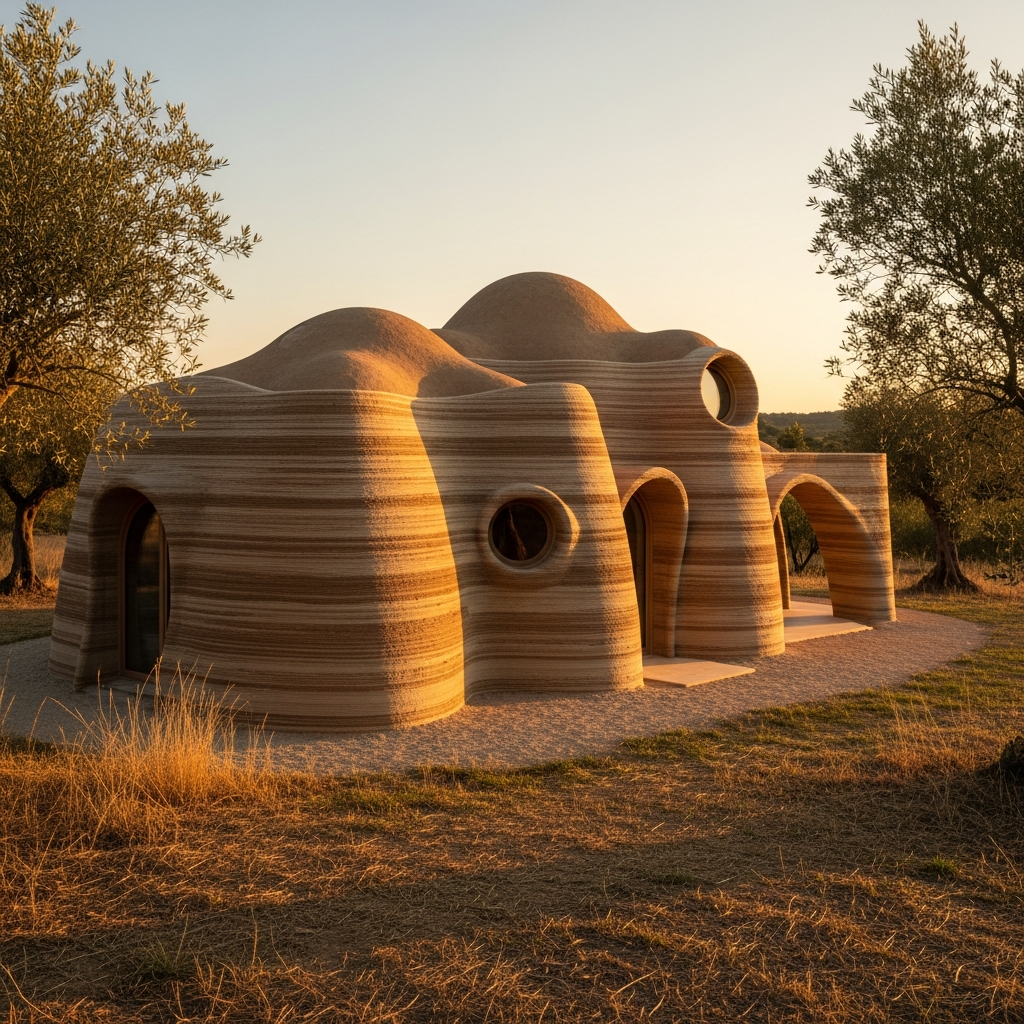
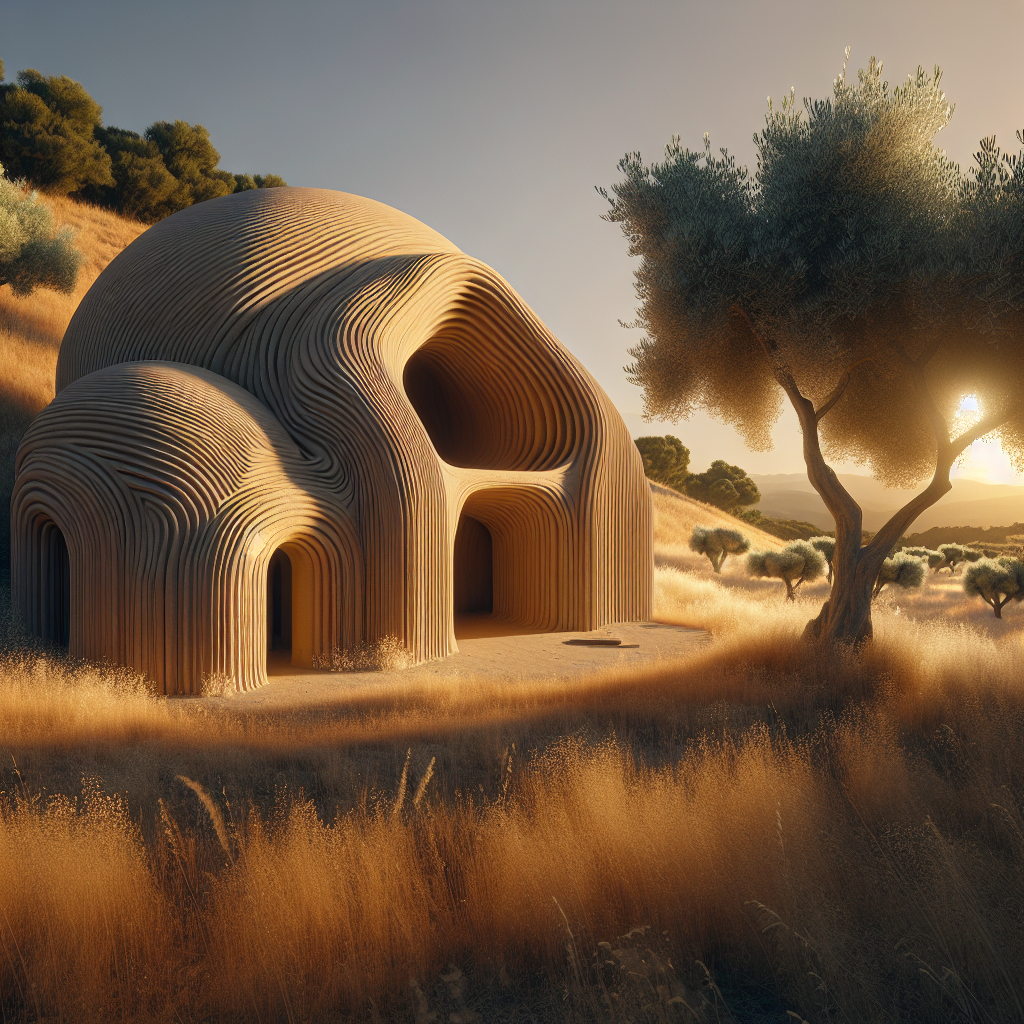
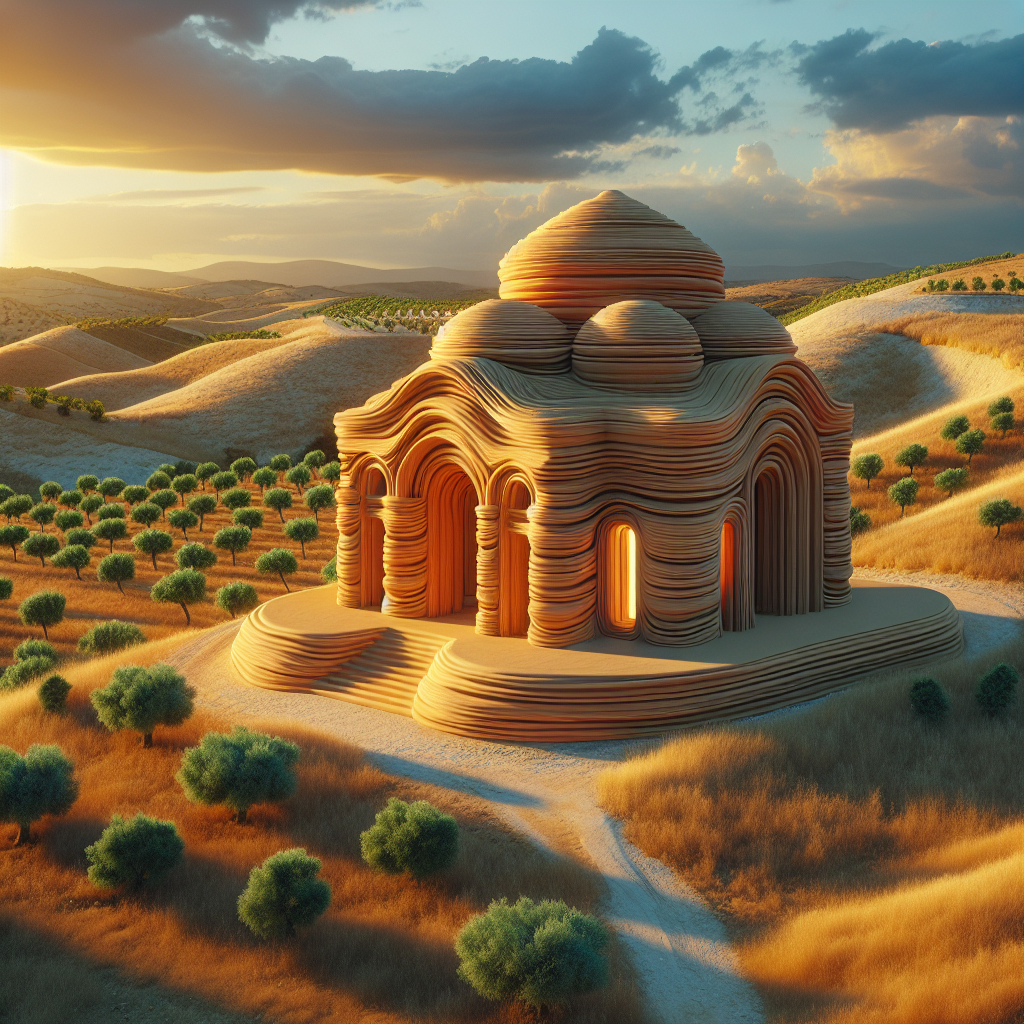
In the Italian countryside, WASP’s “TECLA” project—a portmanteau of “technology” and “clay”—stands as a symbol of this new paradigm. Constructed entirely from local earth, the double-dome structure was printed using a multi-arm robotic system that extruded 60 cubic meters of clay in just 200 hours. The design optimizes airflow and insulation, eliminating the need for traditional HVAC systems. It’s not just a prototype; it’s a manifesto for localized, low-impact architecture.
Meanwhile, in Spain, IAAC’s “TerraPerforma” project explores the thermal behavior of 3D-printed earthen walls under Mediterranean conditions. The research, published by the Royal Institute of British Architects Journal, demonstrates how parametric design can fine-tune clay’s performance to specific climates—opening the door to regionally adaptive construction.
Beyond Aesthetics: Structural and Social Implications
3D printed clay architecture is not only about material innovation; it’s also about accessibility. The technology democratizes construction by reducing labor costs and enabling on-site fabrication. In regions where traditional materials are scarce or expensive, clay offers a locally sourced, low-carbon alternative. This approach echoes the humanitarian potential seen in 3D printed housing initiatives—where technology meets social responsibility.
Moreover, the aesthetic possibilities are vast. The layered striations of printed clay create a visual language that feels both futuristic and primal. Each contour records the rhythm of the machine, much like the fingerprints of a potter. It’s a poetic convergence of craft and code.
Challenges and the Path Forward
Despite its promise, 3D printed clay faces technical and regulatory hurdles. Structural codes for earthen materials remain underdeveloped in many countries, and the durability of unbaked clay in humid climates is still under study. Researchers are experimenting with natural stabilizers—such as lime, hemp fibers, and bio-resins—to enhance resilience without compromising sustainability.
Another challenge lies in scaling production. While small-scale pavilions and experimental homes abound, mainstream adoption requires industrial-grade consistency and faster printing speeds. Yet, as robotics evolve and material science advances, these barriers are gradually dissolving. The convergence of AI-driven design and local material sourcing may soon make 3D printed clay a cornerstone of sustainable urbanism.
Philosophy of the Earth-Built Future
There’s a deeper narrative beneath the technical achievements. In an age defined by digital abstraction, clay reintroduces tactility and imperfection. It reminds us that progress need not mean detachment from the natural world. The act of printing with earth is, in essence, a dialogue between human ingenuity and planetary intelligence.
As architects continue to explore the potential of this ancient material through modern means, the question becomes not whether clay can replace concrete, but how it can redefine our relationship with the ground beneath us. The future of architecture may not be about building higher or faster—but about building wiser, with the very soil that sustains us.
“We are not just printing walls,” says Mario Cucinella, architect of the TECLA project. “We are printing a new way of living with the planet.”
In that sense, 3D printed clay is more than a material innovation—it’s a cultural shift. It’s architecture returning to its roots, not as regression, but as evolution.
Conclusion: Mud as the Medium of Modernity
As we confront the ecological realities of the 21st century, the notion of “mud architecture” no longer evokes fragility or poverty. Instead, it symbolizes resilience, adaptability, and respect for the earth’s finite resources. The union of clay and code offers a vision of construction that is both technologically advanced and deeply human. It’s a reminder that the future of architecture may well be written—not in steel or glass—but in the soft, malleable language of the earth itself.
{
  "seo_title": "3D Printed Clay: The New Concrete",
  "meta_description": "Discover how 3D printed clay is redefining sustainable architecture and emerging as the new concrete for eco-conscious design.",
  "excerpt": "Could clay truly replace concrete? Explore how 3D printing is transforming this ancient material into a sustainable architectural revolution.",
  "focus_keyphrase": "3D printed clay"
}
AI Image Prompts
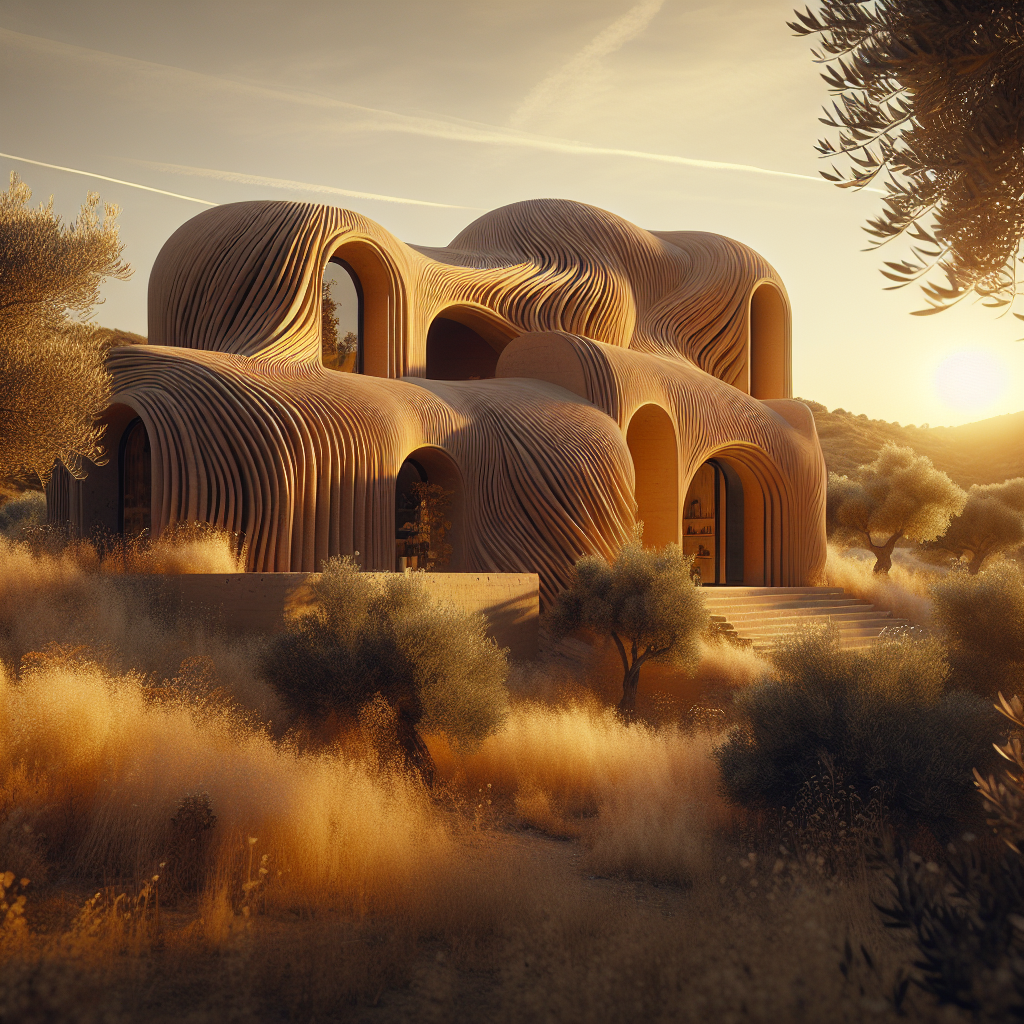
- Prompt: Photorealistic image of a 3D printed clay house in a Mediterranean landscape, captured on a Hasselblad H6D, golden hour lighting, detailed earthen textures and curved walls.
Alt text: 3D printed clay home with organic curves in warm Mediterranean light.
Caption: A 3D printed clay dwelling showcasing how ancient materials meet modern precision. - Prompt: Close-up of robotic arm extruding clay layers on a construction site, macro focus, natural daylight, Hasselblad clarity.
Alt text: Robotic arm 3D printing clay layers with precision.
Caption: The robotic choreography of clay extrusion redefines craftsmanship for the digital age. - Prompt: Interior of a 3D printed
 ×
×❮ ❯